
Coding Interviews Will Never Be the Same Again
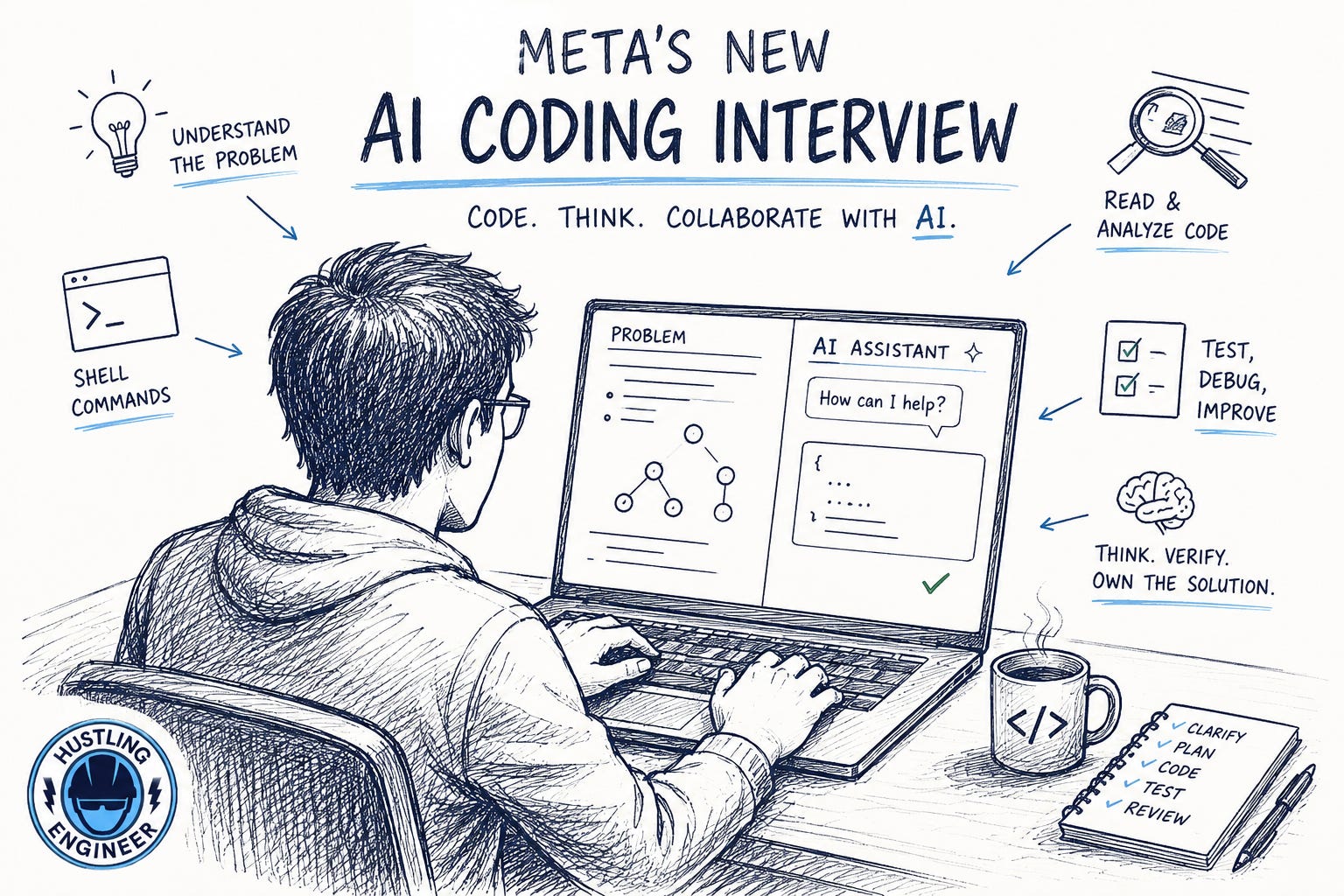
The new wave of AI assisted coding interviews

AI Agentic Mastery
If you need to upskill as an AI Engineer, this is probably one of the most “value for money” cohort out there
I know the instructor and can personally vouch
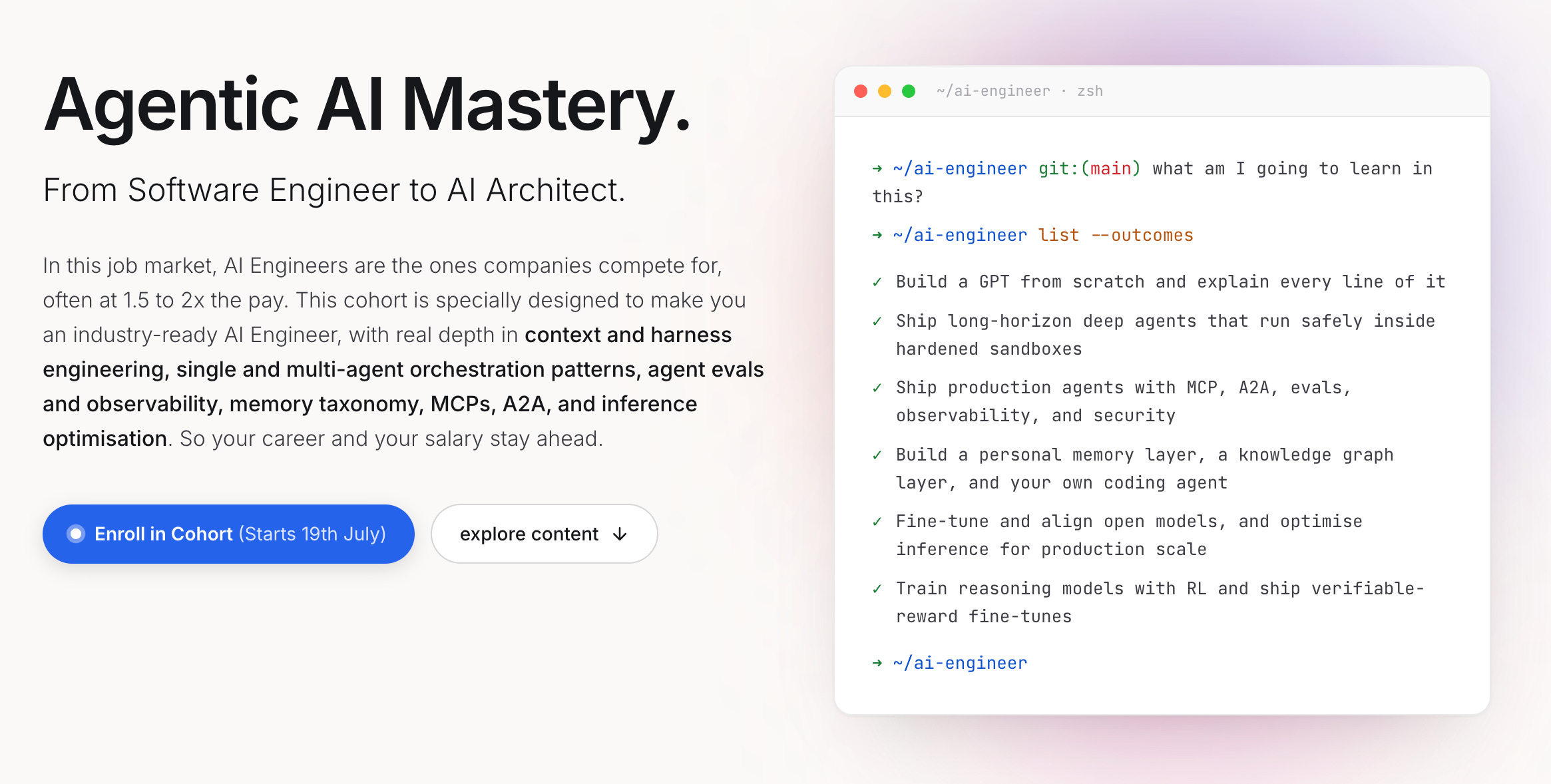
Real depth in context and harness engineering, single and multi-agent orchestration patterns, agent evals and observability, memory taxonomy, MCPs, A2A, and inference optimisation.
About twelve months ago, if someone had told me that Meta would allow candidates to use AI during a coding interview, I probably wouldn’t have believed them.
Interviews have always been built around one assumption:
Can this person solve the problem on their own?
Using ChatGPT during an interview would have been considered cheating.
Fast forward to today.
Meta has started AI-assisted coding interview where candidates have access to an AI assistant while solving programming problems.
When I first read about it, I assumed it was just another experiment that would disappear after a few months.
The more I read, the more I realized something.
This isn’t just Meta trying a new interview format.
It’s probably a glimpse into where software engineering interviews are headed over the next few years.
Software engineering has changed faster than interviews have.
Think about your own day.
How often do you actually write code from scratch?
For me, that’s rarely the hardest part of the job.
Most of my day usually looks something like this:
trying to understand a codebase I didn’t write
debugging an issue that only happens in production
reading logs
reviewing pull requests
understanding APIs I’ve never seen before
writing design docs
discussing trade-offs with other engineers
Writing code is almost the easy part.
Understanding what to write is much harder.
That’s also where AI has become surprisingly useful.
Almost every engineer I know uses tools like Cursor, Claude or Copilot now.
Not because they can’t code.
Because nobody enjoys spending ten minutes remembering a Docker command or digging through documentation just to recall the exact syntax of a Kubernetes manifest.
AI removes a lot of that friction.
And once that became normal at work, it was only a matter of time before interviews started reflecting reality.
Meta isn’t the first company to think this way.
The announcement caught everyone’s attention because Meta is one of the biggest names in tech.
But the idea itself isn’t new.
Many engineering teams have already embraced AI as part of their everyday workflow.
Code reviews include AI-generated suggestions.
Developers use AI to explain unfamiliar code.
Infrastructure engineers use it to write shell scripts.
Backend engineers generate tests before refining them manually.
The expectation has quietly shifted.
Nobody expects you to memorize everything anymore.
They expect you to know how to get to the right answer efficiently.
Interviews are simply catching up.
My first reaction was completely wrong.
I’ll admit it.
When I first heard “AI-assisted interview,” my immediate thought was:
“This is going to make interviews much easier.”
After reading Meta’s announcement, several public discussions, and experiences shared by candidates who have already taken the interview, I don’t think that’s true anymore.
In some ways, I actually think these interviews are harder.
Not because the coding problems are more difficult.
Because AI introduces a completely new failure mode.
Earlier, if your solution was wrong, it was usually because you misunderstood something.
Now there’s another possibility.
The AI confidently gives you the wrong answer.
And you have to recognize it.
That sounds simple.
It isn’t.
Anyone who has used ChatGPT or Claude long enough knows that they can produce code that looks perfectly reasonable until you start testing edge cases.
That’s exactly why blindly accepting AI output is probably the fastest way to fail one of these interviews.
The interview isn’t testing your prompting skills.
This was another misconception I had.
I expected candidates to spend half the interview writing elaborate prompts.
That doesn’t seem to be what’s happening.
In almost every candidate experience I read, AI was used for small, focused tasks.
Things like:
explaining an unfamiliar function
generating a Bash command
understanding a configuration file
writing boilerplate
suggesting test cases
Notice what isn’t on that list.
“Please solve this interview question.”
The strongest candidates weren’t outsourcing their thinking.
They were outsourcing the repetitive parts.
That’s a very important distinction.
One story really stood out to me.
One candidate described spending several minutes trying to understand a deployment script.
Instead of reading it line by line, they asked the AI to explain what each section was doing.
Within a few seconds, they had a high-level understanding of the script.
But they didn’t stop there.
They went back and verified everything themselves.
Later in the interview, they even disagreed with one of the AI’s suggestions because it ignored an edge case.
That interaction stuck with me.
Not because AI saved time.
But because it perfectly mirrors what good engineers do every day.
They don’t trust tools blindly.
They verify.
That’s the skill Meta is probably trying to measure.
One thing I noticed while reading all these discussions is that almost nobody talks about prompts.
Instead, people keep talking about judgment.
When should you ask AI for help?
When should you ignore it?
When should you verify its answer?
When should you write the code yourself?
Those are exactly the decisions engineers make every day at work.
If that’s the future of software engineering, then honestly...
I think this interview format makes a lot of sense.
In the next section, I want to go deeper into the actual interview experience.
I’ll walk through the kinds of tasks candidates have reported seeing, where AI genuinely saves time, where it completely falls apart, and the patterns I noticed across dozens of interview experiences.
Sources & Further Reading
If you’re interested in reading more about the interview format yourself, here are a few good resources:
How can I help?
Join my cohort
“Break Into Senior Engineering Roles,” a live cohort course to help you prepare better and position yourself right for tech interviews and senior engineering roles. [Check Details Here]
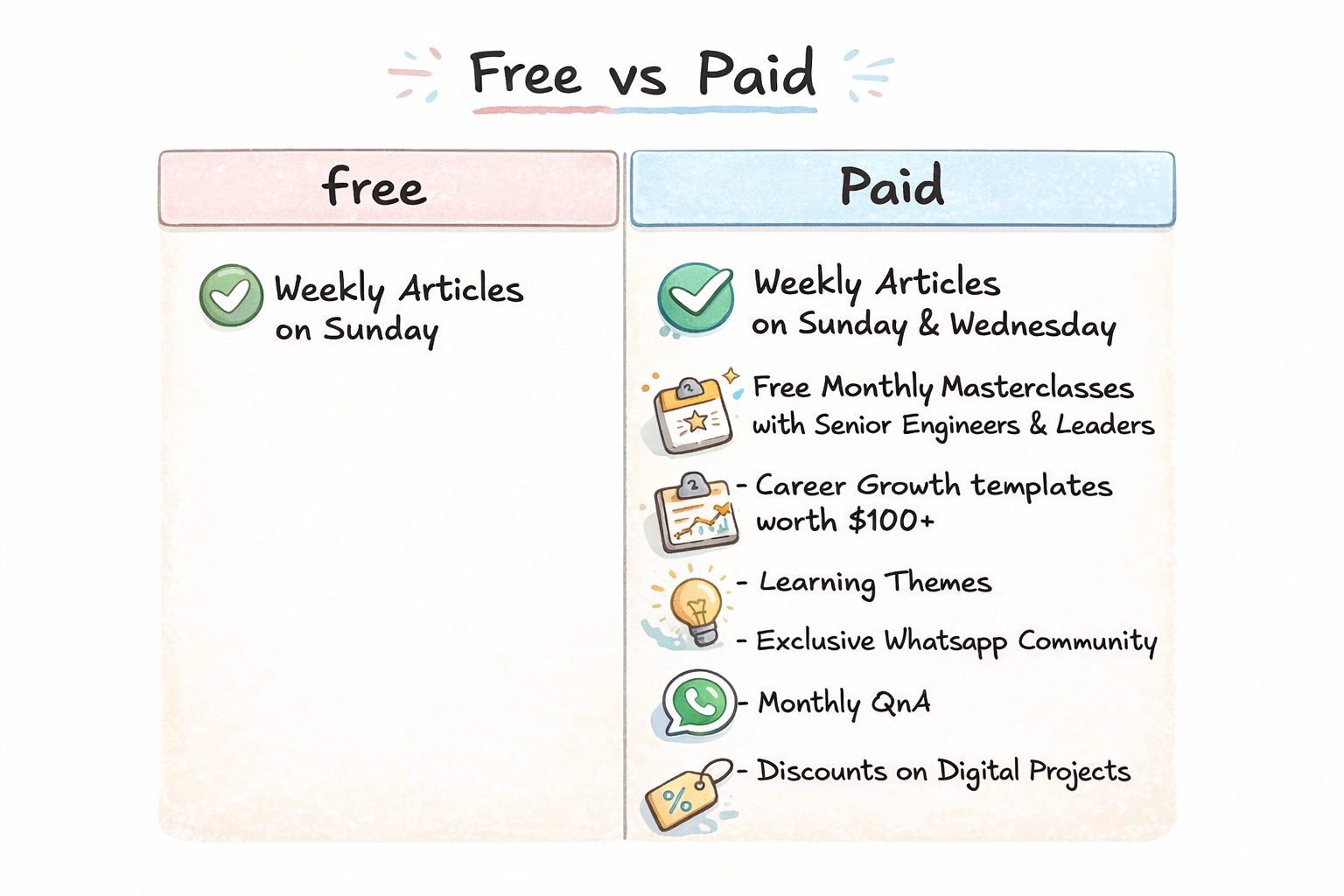
Be a Paid Subscriber
You can get maximum benefit of the high-performer community by being a paid subscriber here. Here are the benefits you get
Sponsor this newsletter
Want to reach 24,000+ senior engineers and tech leaders? [See sponsorship options]
Digital Products
Check out my digital products to help you grow better as a Software Engineer and Leader in Tech
Stay in touch
Find me on
Any questions? Just email me at hemant.pandey17@gmail.com
This tracks with the hiring side: AI/ML roles grew about 25% in India in June while services hiring shrank, so the job moved from writing code to supervising it. The judgment point is the whole game. Once a candidate can use AI, the score stops tracking recall and starts tracking how fast they catch a confident wrong answer, which is a higher variance signal that should widen the gap between strong and weak candidates rather than narrow it. The harder problem sits on the interviewer's side, because verifying the AI is a skill most panels have not written a rubric for yet. Is Meta measuring judgment on purpose, or discovering the old signal just stopped working?
Zia. itszia.ai