
Software Engineering Has A Weird Prestige Addiction
The endless chase of validation is stealing the joy of building

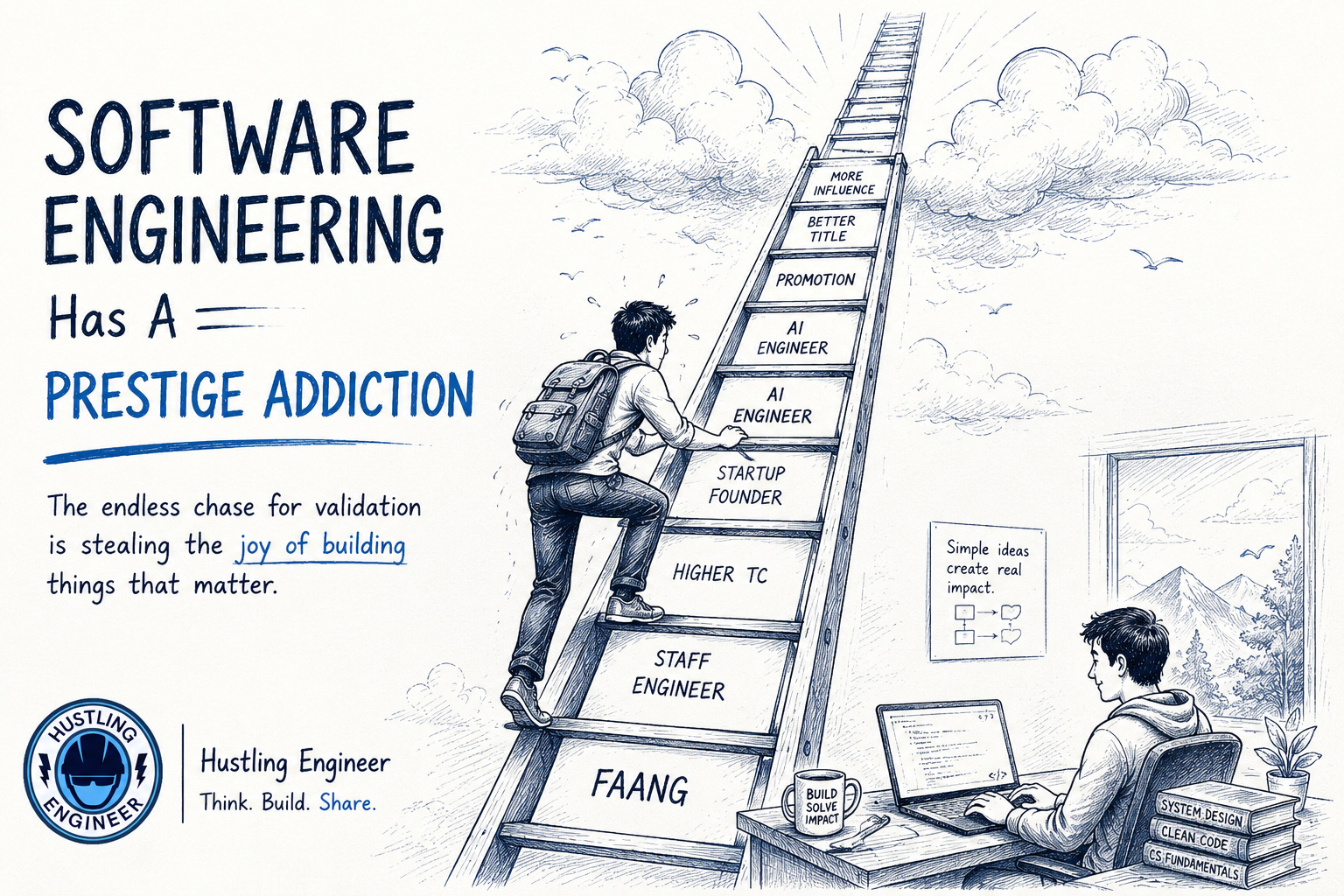
A strange thing happens after a few years in tech.
You stop asking:
“What kind of work do I actually enjoy?”
And start asking:
“What sounds impressive to others?”
That shift is subtle.
But I think it quietly shapes a huge number of engineering careers.
And honestly, most people don’t even realize it’s happening.
The Industry Rewards Prestige More Than We Admit
Software engineering has become deeply tied to status.
You can see it everywhere.
People obsess over:
FAANG logos
compensation numbers
startup valuations
fancy tech stacks
titles
follower counts
“working on cutting-edge AI”
None of these things are bad by themselves.
But over time, many engineers stop making career decisions based on:
curiosity
happiness
learning
meaningful work
And start making decisions based on:
“How impressive will this look online?”
That’s where things become dangerous.
Prestige Quietly Changes Your Priorities
At the beginning of your career, you usually just want to:
learn
build things
get better
earn a stable income
But after some time, external validation slowly enters the picture.
You start comparing yourself constantly.
Someone younger got promoted faster.
Someone on LinkedIn got into Google.
Someone on Twitter is making more money.
Someone launched a startup.
Someone became “Staff Engineer” at 27.
And without noticing, your definition of success starts getting influenced by strangers online. That pressure changes people.
LinkedIn Playbook for Engineers and Founders is available for sale
If you’re a software engineer, tech lead, solopreneur, or builder who wants to grow online without spending hours every week, this playbook is for you.
I built this guide to help you:
✅ Write confidently on LinkedIn
✅ Grow a high-trust audience
✅ Attract real opportunities (job offers, clients, visibility, income)
This isn’t theory. Everything here comes from first-hand experience, what I used to grow my own presence, monetize it, and help others do the same.
Back to the topic
I’ve Seen Engineers Chase Jobs They Secretly Hated
This happens more often than people admit.
I’ve seen engineers:
stay in stressful jobs because the company name looked good
spend years grinding interviews they didn’t even care about
choose prestige over peace of mind
optimize for salary while becoming miserable daily
force themselves into management because it sounded more impressive
From the outside, everything looked successful.
Good salary.
Good title.
Good company.
But internally, many were exhausted.
Because prestige and fulfillment are not the same thing.
The Problem With Prestige Games
Prestige has no finish line.
There’s always:
a better company
a higher salary
a smarter engineer
a faster-growing startup
a bigger title
someone doing better than you
That’s why comparison becomes addictive.
You achieve one milestone and immediately move the goalpost again.
The problem is not ambition.
Ambition is healthy. The problem is when your self-worth becomes tied to external validation.
Because then:
nothing ever feels enough.
Social Media Made This Much Worse
Ten years ago, you mostly compared yourself to coworkers.
Now you compare yourself to the entire internet.
Every single day engineers see:
salary screenshots
promotion announcements
“I got into Meta”
startup success stories
viral productivity posts
AI fear posts
people claiming they work 14 hours daily
After enough exposure, even successful engineers start feeling behind.
That constant comparison slowly changes your relationship with work.
You stop building because you enjoy it.
You start building to impress people.
That’s a dangerous shift.

Prestige Also Affects How Engineers Build Software
This is something people rarely talk about.
Prestige addiction doesn’t just affect careers.
It affects engineering decisions too.
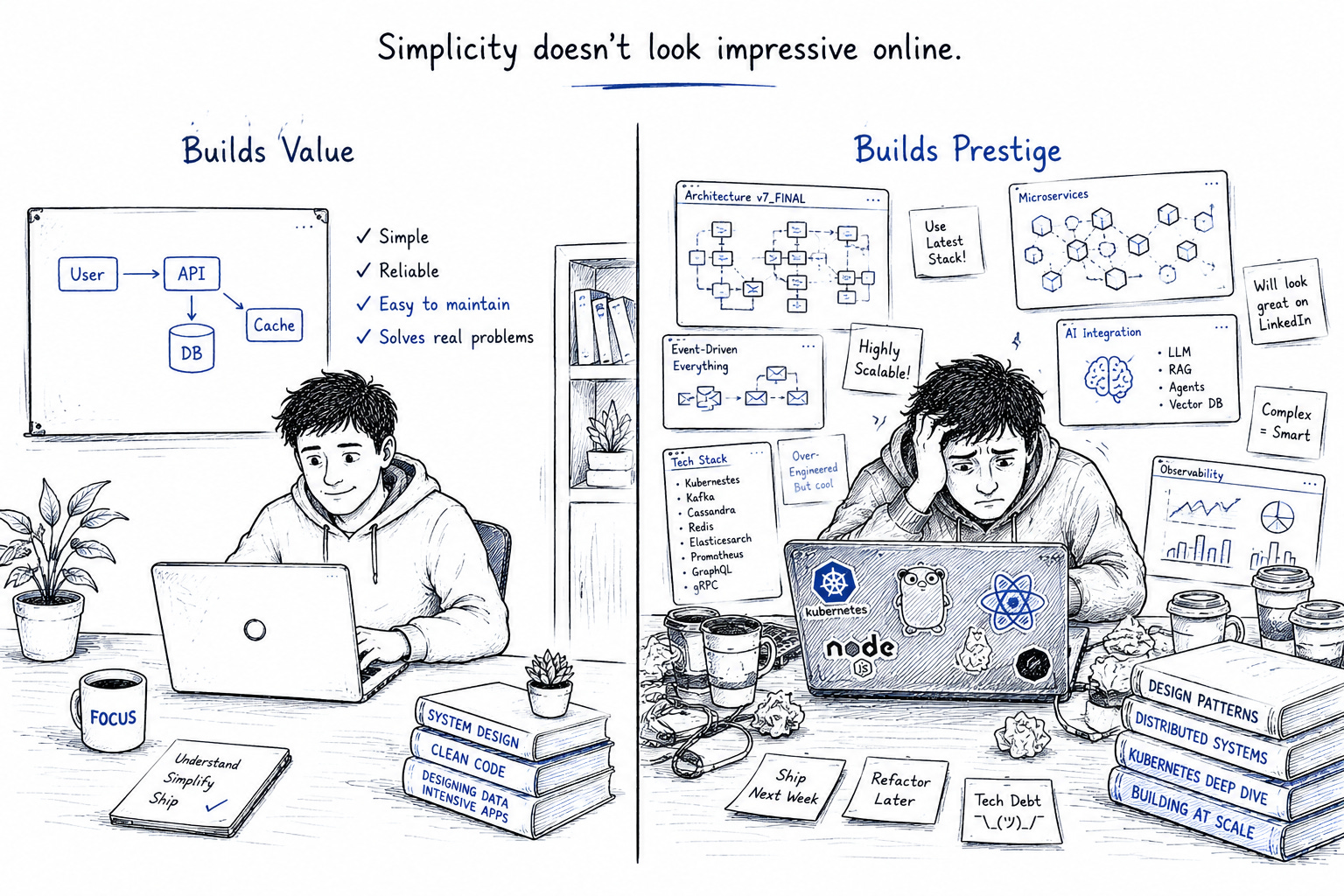
Once status enters the picture, simplicity starts looking boring.
So teams start choosing:
overly complex architectures
trendy tools
unnecessary microservices
fancy abstractions
technologies nobody truly needs
Not because they solve real problems.
But because they sound advanced.
A simple solution rarely gets applause online.
But simple systems are usually:
easier to maintain
easier to debug
cheaper to scale
easier for teams to understand
Good engineering often looks boring from the outside.
That’s something many engineers learn very late.
The Best Engineers I’ve Worked With Were Surprisingly Simple
One of the strongest engineers I ever worked with barely posted online.
No personal brand.
No “10x engineer” content.
No obsession with trends.
But he:
understood systems deeply
stayed calm during incidents
simplified everything
wrote reliable code
communicated clearly
solved problems fast
At that time, I underestimated how valuable those skills were.
Now I think those engineers are incredibly rare.
Because real engineering maturity usually looks less impressive externally.
What Engineers Should Optimize For Instead
I think a lot of engineers would feel happier long term if they optimized for different things.
Here are a few that matter more than prestige.
1. Optimize For Learning
A less prestigious job where you learn rapidly can be far more valuable than a famous company where you stagnate.
Ask yourself:
Am I growing?
Am I improving?
Am I solving harder problems?
Am I becoming more capable?
Those things compound for years.
2. Optimize For Energy
Pay attention to how work affects your mental state.
Some jobs pay well but drain all your motivation.
Some jobs look impressive but destroy your health.
That cost is real.
A career is hard to sustain when you’re constantly exhausted.
3. Build Skills That Compound Everywhere
Frameworks change constantly.
But some skills stay valuable forever:
communication
debugging
system design
product thinking
writing
leadership
decision making
These skills work across every company and every trend.
4. Don’t Confuse Visibility With Value
Some of the smartest engineers are almost invisible online.
They’re not constantly tweeting.
They’re not building audiences.
They’re just quietly excellent at what they do.
And honestly, a lot of great engineering work is invisible.
That’s okay.
5. Define Success For Yourself
This is probably the hardest one.
Because the industry constantly tries to define success for you.
But eventually every engineer has to ask:
“What kind of life do I actually want?”
Not:
“What will impress strangers online?”
Those are very different questions.
Final Thought
I’m not against ambition.
Wanting:
money
growth
recognition
exciting opportunities
is completely normal.
But I think many engineers accidentally spend years chasing prestige without questioning whether it’s actually making them happier.
And by the time they realize it…
they’re already burnt out.
The engineers I admire most today are usually not the most prestigious ones.
They’re the people who:
stayed curious
kept learning
built useful things
protected their health
enjoyed the craft itself
That feels much more sustainable long term.
How can I help?
Join my cohort
“Break Into Senior Engineering Roles,” a live cohort course to help you prepare better and position yourself right for tech interviews and senior engineering roles. [Check Details Here]
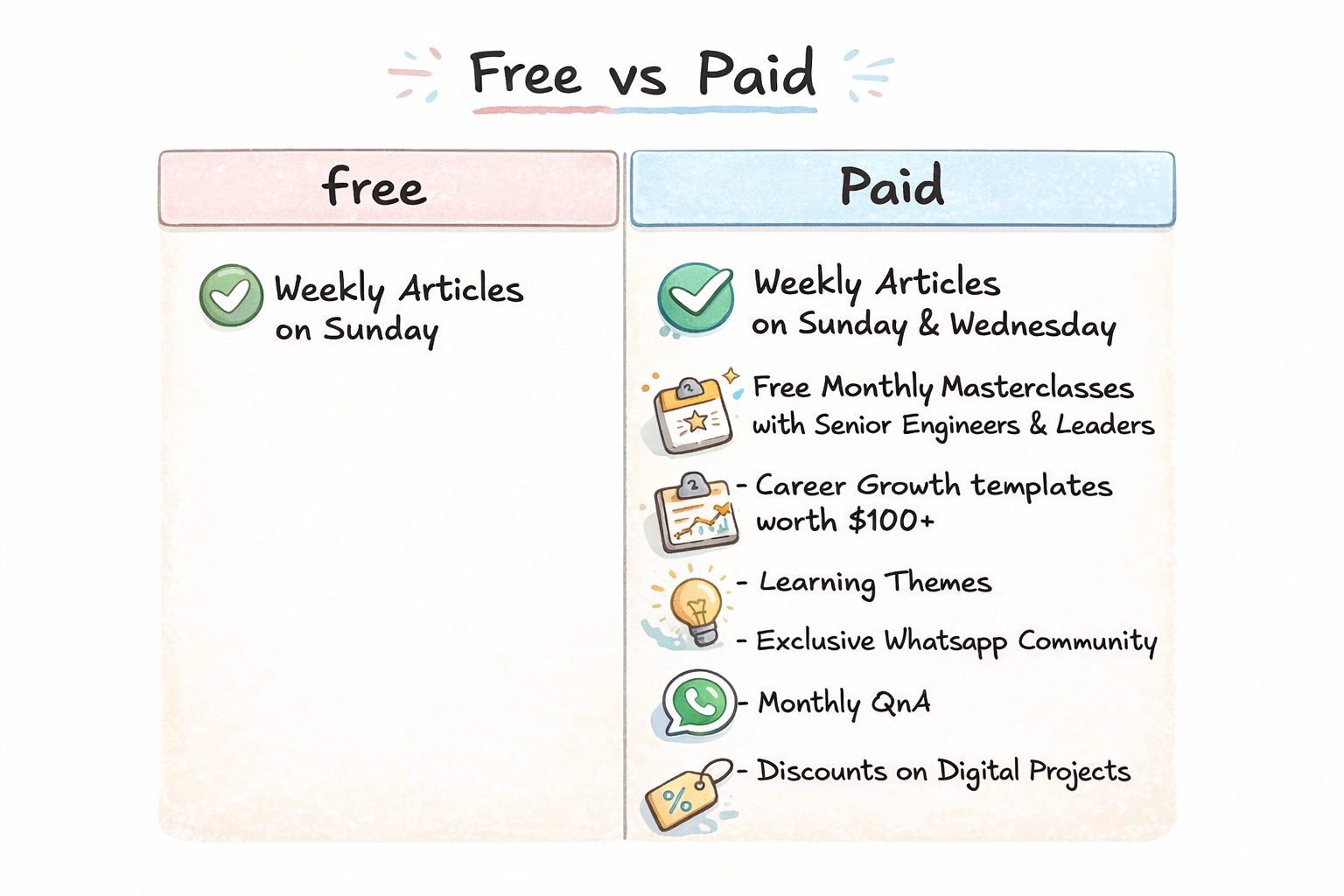
Be a Paid Subscriber
You can get maximum benefit of the high-performer community by being a paid subscriber here. Here are the benefits you get
Sponsor this newsletter
Want to reach 24,000+ senior engineers and tech leaders? [See sponsorship options]
Digital Products
Check out my digital products to help you grow better as a Software Engineer and Leader in Tech
Stay in touch
Find me on
Any questions? Just email me at hemant.pandey17@gmail.com
Prestige-addiction reads louder when you put compensation next to it. Per Levels.fyi 2025-26 and Aon India TRS 2026, the FAANG-equivalent senior engineer in Bangalore is now sub-band on TC versus the Staff-AI-product engineer at a 200-person AI-native company, by 18-35% in some role pairs. The prestige stack you describe (logos, titles, cutting-edge AI signaling) is being priced against the scope-and-shipped-system stack, and the scope side is winning the market. The career conversations I track show engineers who optimize for logo at 8-12 YoE exit their next negotiation 15-25% behind engineers who optimize for shipped-AI scope at the same band. The harder version of your question. What scope-evidence does a mid-career engineer assemble between today and their next move, now that the FAANG logo does not carry the comp weight it carried two years ago?
Zia. AI career strategist for Indian professionals. itszia.ai